


Our Tools
Marinov Design
Our products are handmade. We don’t have machines in the workshop, except of a Dremel (used mostly as a burnisher) and a small battery driven drill. The only electricity we use is for lighting and for heating, when needed. The electricity comes from our rooftop photovoltaic power station which delivers app. 6000 kWh/Year clean energy.
For the leather working processes we are using very basic leather tools.
- For Cutting & Skiving
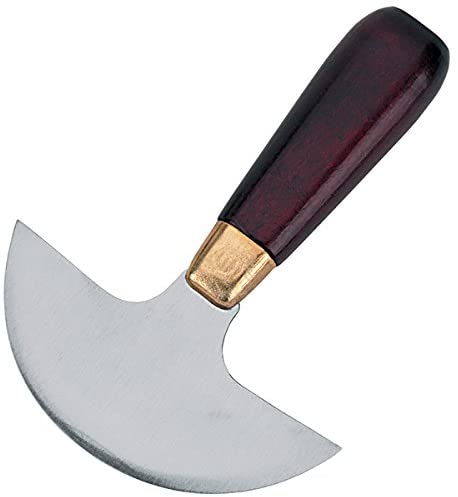
The round knife is the iconic leatherworking tool because of it’s versatility when cutting and it’s ability to skive.
- For rounding out edges
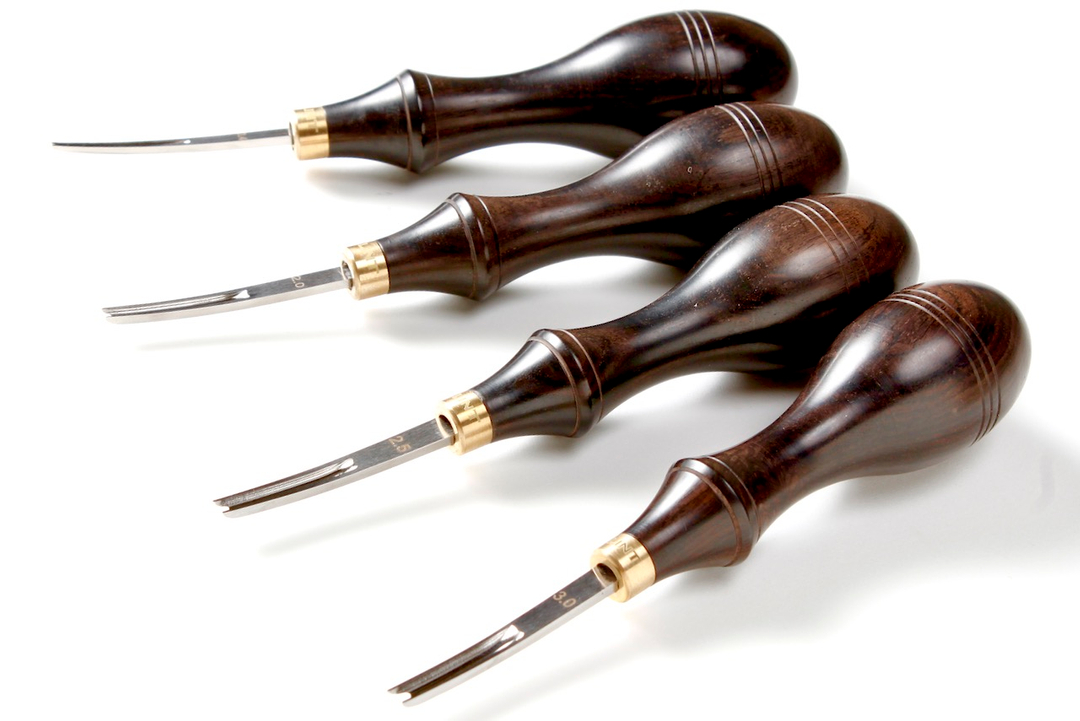
Edge bevelers have a sharpened notch that is used for removing part of the edges, helping to round them out. Generally, I use them on thicker leathers (2+mm).
- For digging a STITCHING CHANNEL
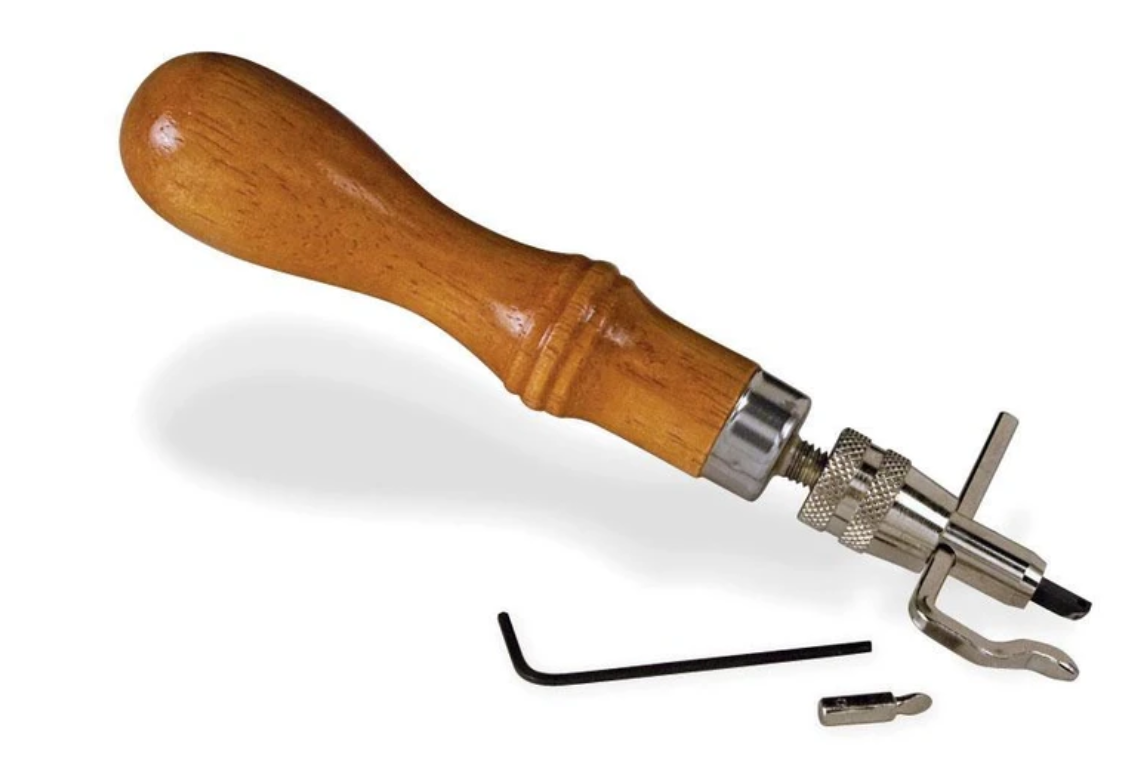
Groover and Creaser – By cutting a small channel out of the leather, the stitching no longer sticks up from the leather and therefore receives less friction in daily use.
- For widening and Creating stitching holes
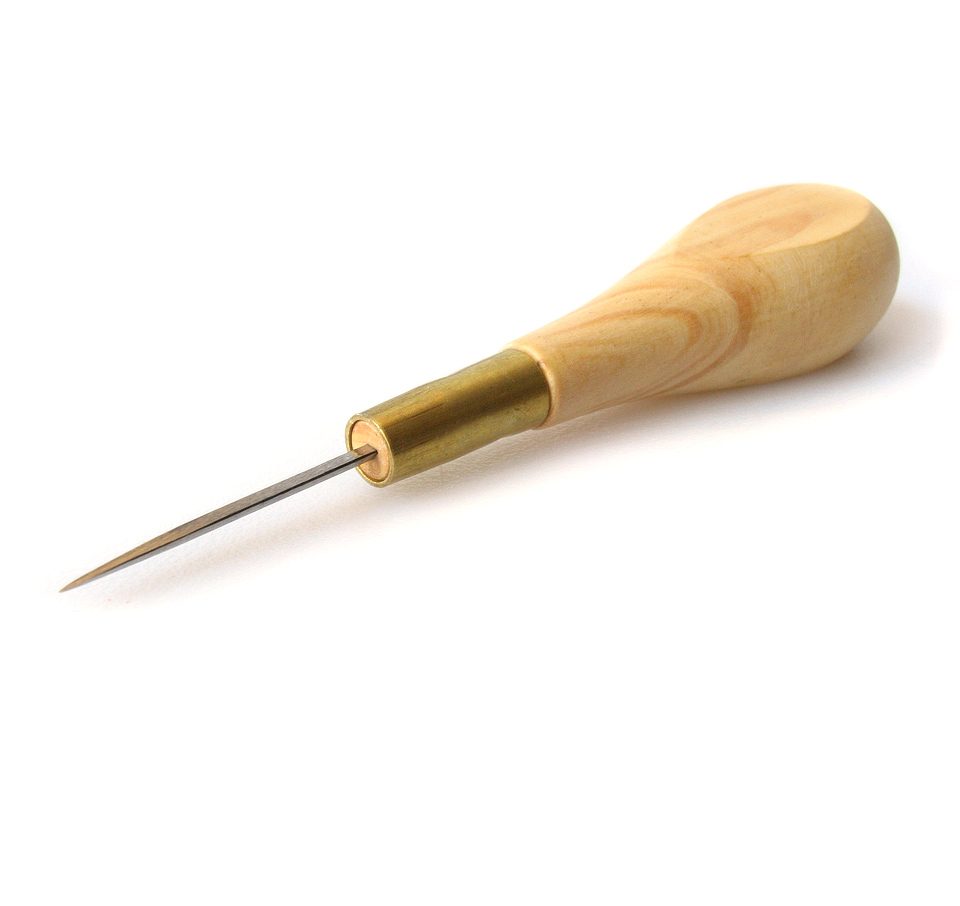
The stitching awl has a blade that gets wider as it approaches the base. The further the blade is pushed into the leather the larger the hole gets – making it easy to adjust the size of a hole that was too small for the stitching.
I use a pricking iron to mark the leather, an then the awl to create each hole for stitching.
- For slicking edges
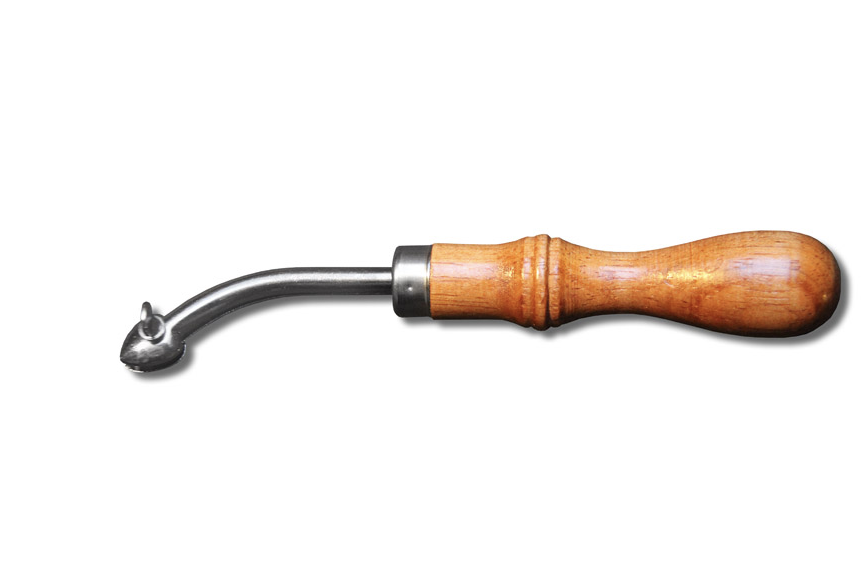
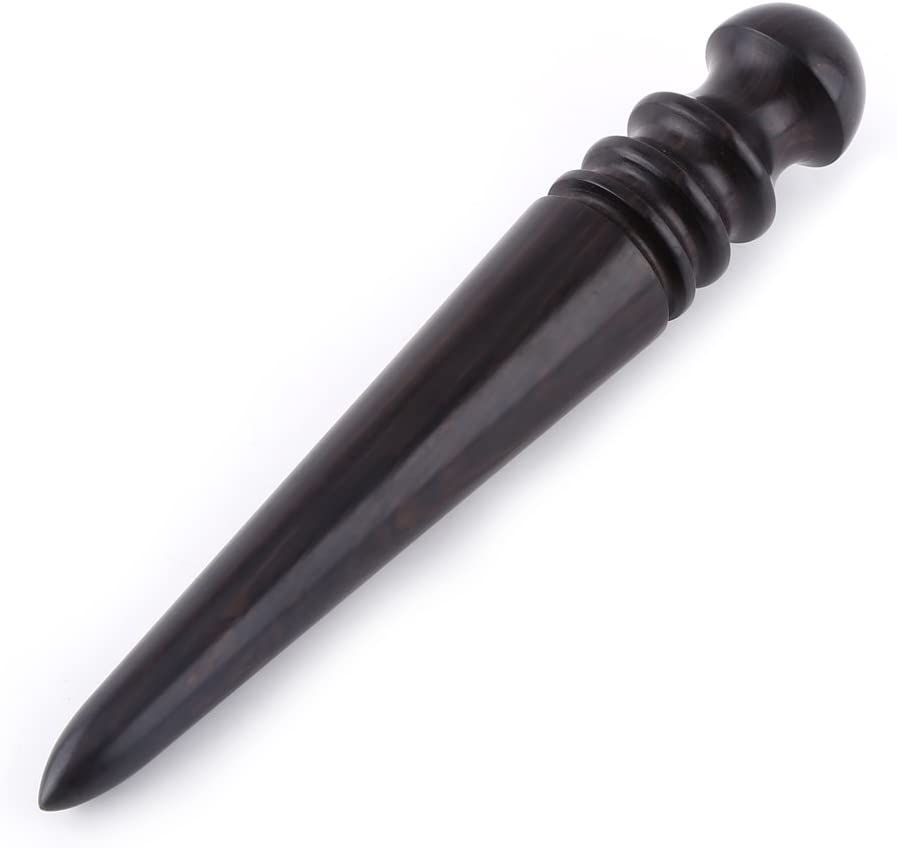
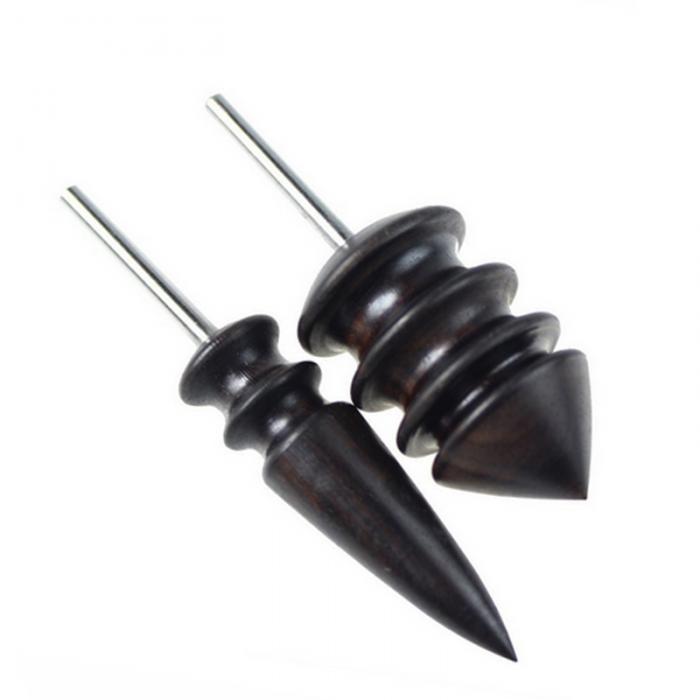
Edge Burnisher – Using friction, the edge burnisher melts fibers on the edge of the leather together, creating a slick surface that won’t fray.
- For Stitching
Stitching Needles – I use the old Saddle Stitching method – two needles – two hands. The handsewn saddle stitch creates leather goods that last much longer. Each stitch is made up of two strong, independent, stitches.
- For Holding Leather
Stitching Horse – Leather is placed between the two wooden planks and then clamped into place. Once clamped, the horse holds the leather at a good height to stitch while I’m sitting down. I have made my own modification of the horse, with prolonged wooden planks, so I can easily stitch long, straight stitches.
- For punching RIVET holes
Punches with different sizes depending on what size hole I need. Most times, these holes are used for rivets or for the tongue of a belt buckle. A Hole Tang is also used, especially when several holes for stitching are needed.